Choosing an Inclination Sensor for Mobile Equipment: 5 Questions OEMs Should Ask

Choosing an Inclination Sensor for Mobile Equipment: 5 Questions OEMs Should Ask

The machine has been working for years. Now the inclination sensor is being discontinued, delivery dates are slipping, or field service is seeing problems that need attention.

Your engineering team needs a replacement. Ideally, one that fits the existing machine without creating unnecessary changes to wiring, software, or mounting.

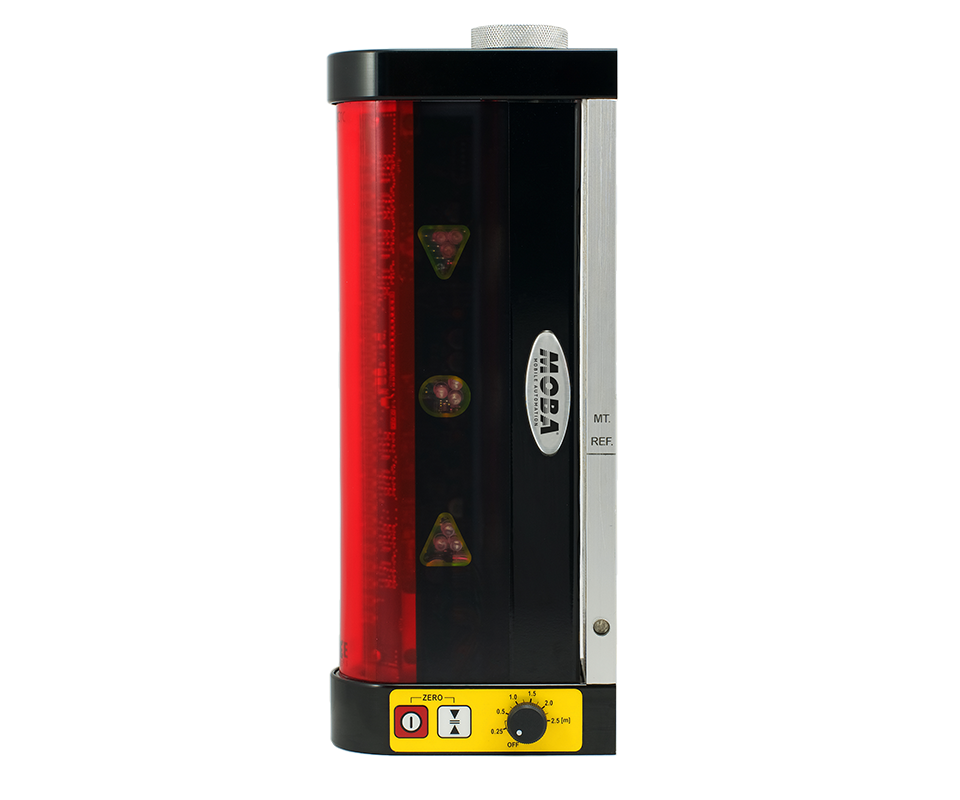
An inclination sensor, often called a tilt sensor, measures angular position relative to gravity. Choosing one for mobile equipment means looking beyond measuring range and accuracy. It also means understanding how the sensor will fit, communicate, and perform on the machine throughout its working life.

Before selecting a sensor for a new platform or replacing one on an existing machine, start with these five questions.

1 – What does the machine need to measure?

Start with the application. What angle needs to be measured, and how will the machine use that information?

Monitoring chassis tilt may require different specifications than measuring the position of a moving machine structure. Your team needs to establish the required measuring range, whether the application needs one or two axes, and the accuracy the machine actually requires.

Resolution and accuracy also deserve separate attention. A sensor’s ability to report small changes does not, by itself, establish how closely its readings match the actual angle.

Consider when the measurement matters: while the machine is stationary, during movement, or throughout an operating cycle. That distinction belongs in the initial requirements discussion because it helps the supplier understand the conditions behind the specification.

2 – What conditions will the sensor experience?

A sensor mounted inside a protected enclosure has a different working environment from one exposed on a machine frame.

Think about the full operating cycle. Where will the sensor encounter vibration, shock, temperature changes, moisture, dust, or washdown? Could its location expose the housing, connector, or cable to damage during normal operation or maintenance?

Environmental ratings are useful, but you need to evaluate them against the actual installation. Review the sensor’s operating limits, mounting requirements, and connection details together.

This is also where field service can contribute valuable information. Technicians often know which locations collect water, where cables are under strain, and which components are difficult to access. Bringing that experience into selection can help the engineering team identify concerns before production.

3 – How will it integrate with the existing machine?

A sensor can meet the measurement requirements and still require significant integration work.

Check the available mounting space, orientation, connector, pin assignment, supply voltage, and communication requirements. If the machine uses CANopen, for example, confirm the specific interface and configuration requirements with the supplier.

Then look at how the machine will use the data. What calibration or zero-setting procedure is needed? What software changes might be required? How will technicians configure or replace the sensor in the field?

These details help establish whether a standard product fits the application or whether an adaptation is worth exploring.

The earlier you discuss them, the easier it is to understand the development effort before committing to a component.

4 – What must be verified when replacing an existing sensor?

When a component becomes obsolete, finding something with similar specifications is a useful starting point. Compatibility still needs to be established.

A replacement review should account for mechanical fit, electrical connections, communication behavior, measurement performance, and the machine’s response to the new sensor.

Document what needs to stay the same and where changes are acceptable. Include both production machines and equipment already in service. A change that is manageable on the assembly line may create additional work for technicians supporting older machines.

Ask the prospective supplier what information they need to assess the application and what validation will be required. Treat “drop-in replacement” as a conclusion to verify through engineering review and testing.

5 – What support will you need after production begins?

Sensor selection is also a supplier decision.

Purchasing needs to understand availability, production capacity, and how product changes will be communicated. Engineering needs access to documentation and people who can help resolve integration questions. Field service needs a practical path for troubleshooting and replacement.

Discuss those expectations early. Ask how the supplier supports validation, handles technical questions, and plans for the component’s lifecycle.

The goal is to select a sensor your organization can build with, maintain, and support over time.

Start with the machine requirements

At MOBA, we work with OEMs to understand the application behind the component. That includes the operating environment, integration constraints, production needs, and people who will support the machine in the field.

Depending on the requirements, the right approach may be a standard sensor, an adapted configuration, or a broader engineering discussion.

If you are selecting an inclination sensor or replacing an existing component, bring us your machine requirements and the challenge you need to solve. We can work through the options together.

START WITH PROVEN TECHNOLOGY. BUILD IT AROUND YOUR MACHINE.

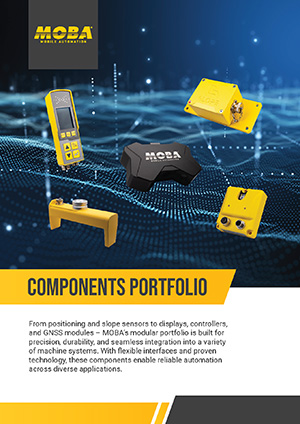
Explore proven sensors, controllers, operator interfaces, and components designed for integration into mobile machinery.
CONTACT AN EXPERT

Name
=

MOBA Showcases Flexible OEM Solutions at iVT Expo Chicago

MOBA Showcases Flexible OEM Solutions at iVT Expo Chicago

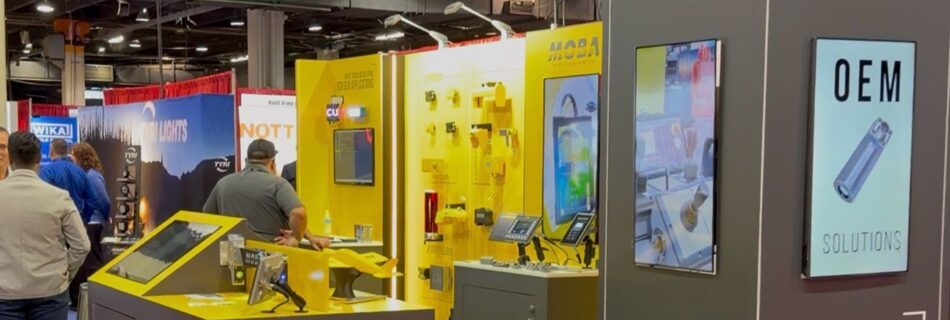
Last week, MOBA connected with industry leaders, OEMs, and technology professionals at iVT Expo in Chicago, showcasing how our flexible approach to product development helps manufacturers turn unique challenges into custom solutions.

At the MOBA booth, our team highlighted the combination of sensor technology, engineering expertise, and manufacturing capabilities that enables us to be more than a component supplier. We work closely with OEMs as a trusted development partner, creating solutions tailored to their specific applications and requirements.

From Sensors to Custom Solutions

Every OEM application comes with its own challenges. That’s why flexibility is at the core of MOBA’s approach.

Our broad sensor portfolio and in-house capabilities give our team the foundation to develop solutions around the needs of our customers rather than forcing an application to fit an off-the-shelf product. From sensing and control technology to custom development and manufacturing, MOBA brings the expertise and capabilities together to help OEMs move their ideas forward.

Advancing Safety and Automation Through Technology

The conversation extended beyond the MOBA booth when Anant Patel, VP of Operations and Strategic Projects at MOBA, joined an industry panel discussing the important role sensors and technology play in safety applications and automation.

As machines and vehicles become increasingly automated, reliable sensing technology is essential for helping equipment understand its environment, improve operator awareness, and enable smarter, safer operation. The discussion reinforced the growing importance of integrating the right technology into equipment from the earliest stages of development.

Thank You, Chicago

Thank you to everyone who stopped by our booth, joined the panel discussion, and connected with the MOBA team at iVT Expo Chicago. We enjoyed discussing the challenges OEMs are solving today—and the opportunities ahead as sensor technology, automation, and intelligent systems continue to evolve.

Looking for a technology partner that can help develop a solution around your application? Contact MOBA to start the conversation.

CONTACT AN EXPERT

Name
=
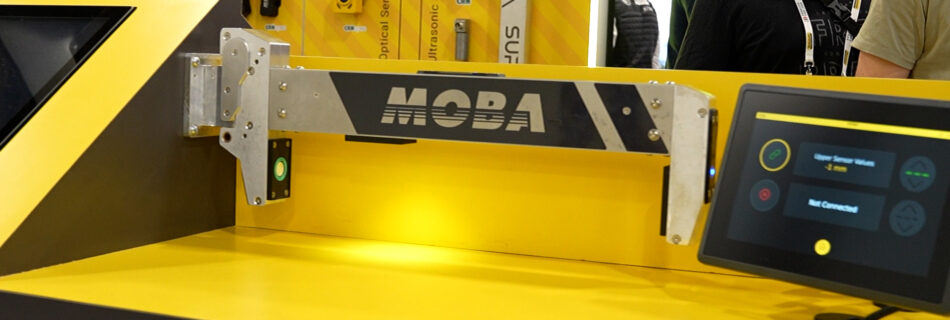
Close-up of a yellow MOBA industrial machine at a trade show, showing mounting hardware and a nearby touchscreen control panel on the right

Beyond Standard Components: See MOBA’s Flexible OEM Technology at iVT Expo Chicago

Beyond Standard Components: See MOBA’s Flexible OEM Technology at iVT Expo Chicago

For equipment manufacturers, finding a sensor, controller, or display that meets a specification is only part of the challenge. The harder question is often: How well will that technology actually integrate into the machine?

At iVT Expo Chicago 2026, MOBA will showcase a different approach to OEM technology—one built around flexibility, engineering collaboration and the ability to adapt proven technology to the specific requirements of an OEM application.

Visit MOBA in Hall F, Stand 445 to explore sensors, control technology, HMI solutions and new concepts designed specifically for mobile machinery and demanding OEM applications.

When Off-the-Shelf Isn’t Quite the Right Fit

Many component suppliers operate around a fixed catalog. An OEM selects the closest available sensor, controller, or interface and then engineers the machine around the limitations of that component.

MOBA offers another option.

With engineering, development and manufacturing capabilities within the MOBA organization, we can work directly with OEM engineering teams to determine how an existing technology can be adapted to better fit the application.

That can mean modifying a proven platform, adapting interfaces or communication requirements, developing application-specific software, changing mechanical integration, or combining multiple technologies into a more complete system.

The goal is simple: create a better drop-in solution for the OEM rather than forcing the OEM to redesign around a standard component.

For manufacturers developing new equipment—or updating an existing platform—that flexibility can help simplify integration, reduce development challenges, and create a solution that feels as if it was designed for the machine from the beginning.

Sensors Are Only the Beginning

MOBA has decades of experience developing technology for mobile machinery, including solutions that operate every day in construction, agriculture, lifting, waste management, and other demanding applications.

At iVT, OEM engineers can explore technologies including:

  • Inclination and positioning sensors
  • Ultrasonic sensing technology
  • Controllers and control electronics
  • Rugged display platforms
  • Customizable HMI solutions
  • CAN-based components
  • Signaling and operator communication systems
  • Machine control and automation technology
  • Integrated hardware and software solutions

These technologies can be used individually or combined as part of a larger system.

That distinction is important.

MOBA isn’t limited to supplying the individual components inside a machine. Our experience as a system integrator gives our engineers a broader understanding of how sensors, controllers, HMIs, communications, and software must work together in real-world applications.

From Component Supplier to Engineering Partner

OEM development rarely fits neatly inside a product catalog.

Different machines have different mechanical constraints, communication architectures, environmental requirements, and operator expectations. Even when an existing technology provides the necessary functionality, its standard configuration may not be ideal for the application.

MOBA can work directly with an OEM’s engineering team to bridge that gap.

Instead of starting every project with a completely new design, we can leverage proven technology and determine how to modify, configure, or integrate it to meet the application’s requirements.

This approach gives OEMs access to established technology while maintaining the flexibility necessary to differentiate their machines.

And because MOBA supports development from engineering through manufacturing, solutions can be designed with production and scalability in mind from the beginning.

See DUAL-LINK: Power and Data Without a Traditional Connector

One of the innovative concepts on display at iVT demonstrates exactly the kind of engineering MOBA brings to mobile machinery.

MOBA DUAL-LINK uses inductive technology to transfer both electrical power and data without a traditional hard-wired connector between the two components.

Traditional plug connections can become vulnerable points on mobile equipment. Dirt, moisture, vibration, repeated connection cycles, and mechanical stress can contribute to wear, connection problems, and maintenance needs.

DUAL-LINK takes a different approach.

Using inductive transmission, power and bidirectional data communication can cross the connection without exposed electrical contacts. The concept can eliminate the need for a traditional physical plug connection in applications where components need to connect, disconnect, or operate in demanding environments.

For OEM engineers, the possibilities go well beyond eliminating a cable.

The technology could simplify the use of interchangeable attachments or components, reduce connector wear, improve reliability in harsh environments, and create entirely new approaches to machine design.

It is also a good example of what visitors will find at the MOBA booth: not simply another catalog of components, but technologies and engineering concepts that can help OEMs rethink how their machines are built.

Bring Us Your Application

The most valuable conversation at iVT may not start with one of our products.

It may start with your machine.

Bring MOBA’s engineers the application, integration challenge, or idea you’re working on. Whether you need a sensor that better fits an existing machine architecture, a customized HMI, an integrated control solution, or technology for an entirely new equipment platform, our team can help determine the right path forward.

Sometimes that means selecting an existing MOBA component.

Sometimes it means modifying one.

And sometimes it means developing something new.

That flexibility is what separates a component supplier from an OEM technology partner.

Meet MOBA at iVT Expo Chicago.

See MOBA’s latest OEM sensors, controls, HMI technologies and innovative concepts firsthand at iVT Expo Chicago, August 19–20, 2026.

Visit MOBA in Hall F, Stand 445, and talk with our team about how our engineering and system integration capabilities can help turn proven technology into a solution built around your machine.

Whether you’re developing the next generation of equipment or looking for a better way to integrate technology into an existing platform, MOBA is ready to engineer with you.

CONTACT AN EXPERT

Name
=