Top Challenges in Commercial Paving—and What Actually Helps Fix Them
Let’s Be Honest About Paving Today
If you’ve spent any time around a paver, you already know—commercial paving isn’t easy. Every job comes with pressure to hit smoothness, stay on schedule, and not blow the budget.
And the frustrating part? A lot of the issues that cause problems aren’t always obvious until it’s too late.
Whether it’s a big commercial job or a small parking lot, the same challenges keep showing up.
1. Getting a Truly Smooth Surface Isn’t Easy
On paper, it sounds simple—lay it down smooth. In reality, base inconsistencies, material flow, and constant manual adjustments make that tough.
Even great operators have off moments, especially over long pulls or when conditions change mid-job.
And on smaller jobs, you don’t always have the luxury of dialing everything in perfectly.
What that leads to:
- Callbacks you didn’t budget for
- Surfaces that just aren’t quite right
- Jobs that take longer than they should
2. You Can’t Always Rely on Having Your Best Crew
Everyone wants experienced operators—but they’re getting harder to find.
So now you’re trying to maintain quality with mixed experience levels, and that usually means more variability from job to job.
The reality:
- One crew nails it, another struggles
- More time spent managing the screed
- Slower overall production
3. Margins Are Tight—And Mistakes Cost More Than Ever
Material isn’t cheap. Labor isn’t cheap. And rework is where things really hurt.
It doesn’t take much—a little too much material here, a correction there—and suddenly your profit is gone.
4. Small Jobs Still Demand Big Results
A parking lot or small commercial job might not seem like a big deal—but the customer still expects it to look right and perform well.
The problem is, you don’t always want to spend a ton of time setting up stringlines or making constant adjustments just to get there.
5. Drainage Problems Don’t Show Up Until It’s Too Late
You can have a job that looks perfect when you’re packing up—but if water isn’t flowing correctly, it won’t stay that way.
Low spots, inconsistent slope, or small grading errors can lead to standing water. And once that happens, you’re dealing with callbacks, complaints, and long-term pavement damage.
What that leads to:
- Puddling and drainage issues
- Premature wear and failure
- Costly fixes after the job is already done
6. ADA Compliance Leaves No Room for Error
On commercial work, ADA requirements aren’t optional—and they’re not forgiving.
Cross slopes, running slopes, and transitions all have to be within tight tolerances. Trying to hit those manually, especially across ramps and tie-ins, is where things can go sideways.
The risk:
- Failed inspections
- Rework under pressure
- Liability concerns
Where MOBA-Matic Starts Making a Difference
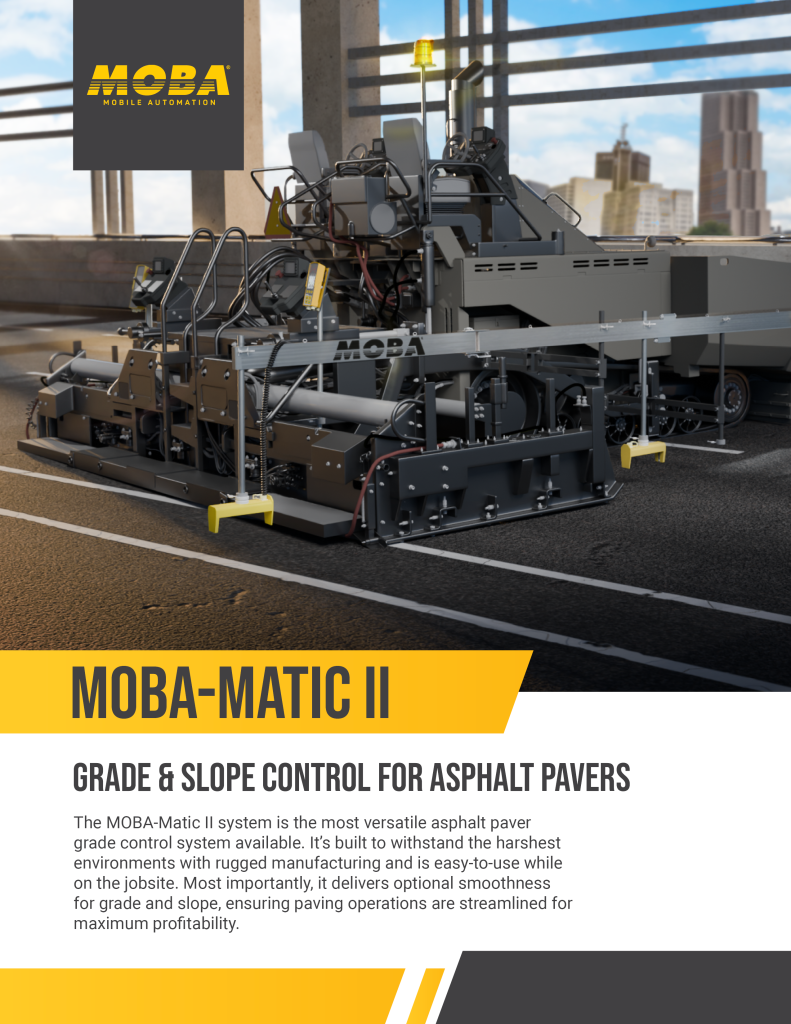
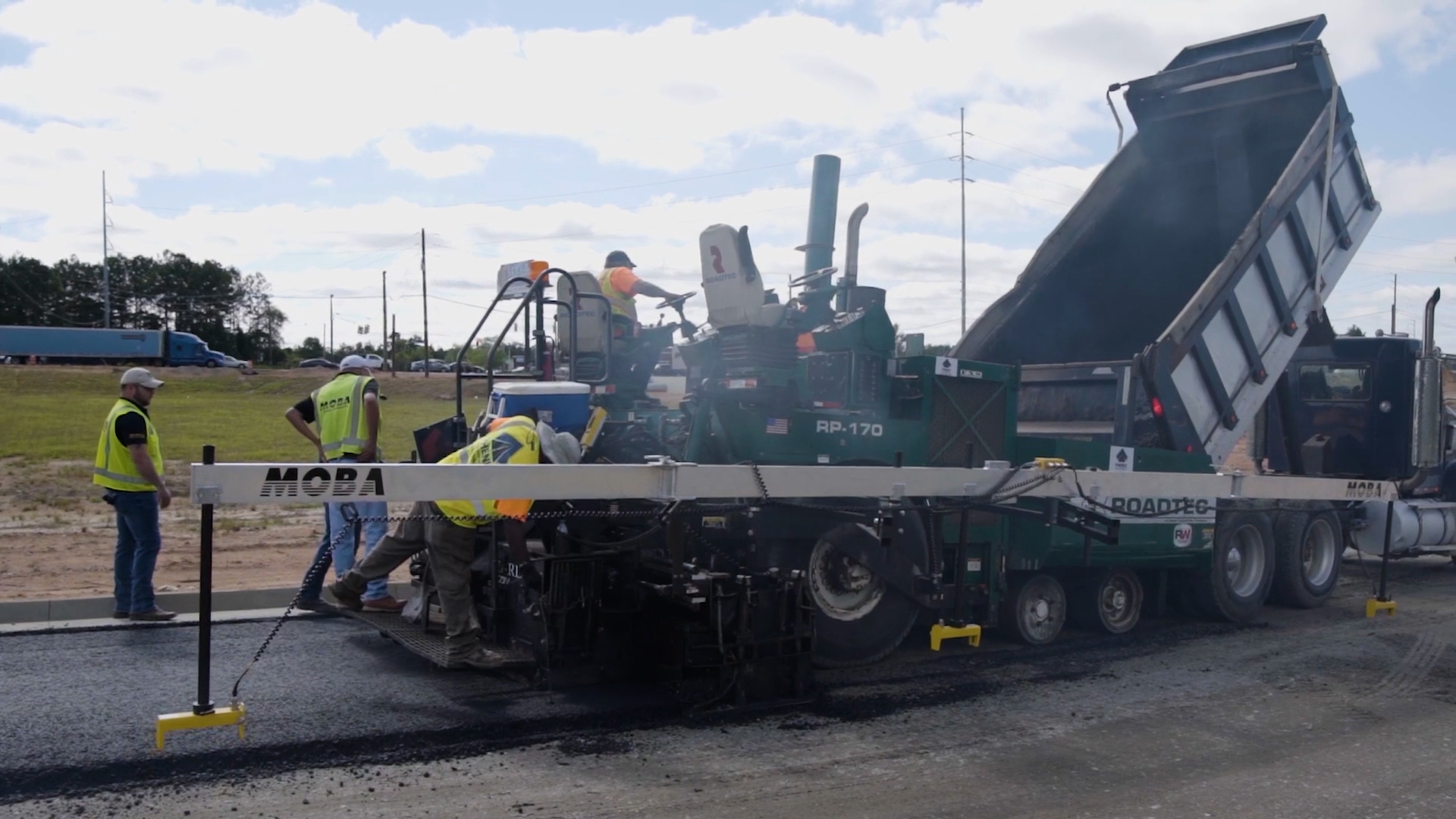
This is where something like the MOBA-Matic II really changes how the job feels day-to-day.
Instead of constantly chasing grade and slope manually, the system is doing that work for you in real time.
You’re not replacing the operator—you’re just taking a lot of the pressure off them.
What you notice pretty quickly:
- The mat stays more consistent
- Less overcorrecting
- Smoother results without fighting the machine
- Better control over slope for drainage and ADA targets
It also helps level the playing field. Less experienced operators can still deliver solid results without everything riding on them.
Why Sonic Ski Is a Bigger Deal Than People Expect
The MOBA Sonic Ski is one of those things that, once you use it, you don’t really want to go back.
Instead of reacting to every little bump in the base, it averages things out so the screed isn’t constantly chasing imperfections.
That matters more than people think—because those small inconsistencies are exactly what create drainage issues and throw off slope.
Where it really helps:
- Jobs where the base isn’t perfect (which is most of them)
- Situations where you’d rather not run stringline
- Smaller jobs where setup time matters
You end up with a smoother mat, more consistent slope, and fewer surprises after the job is complete.
This Isn’t Just for Big Highway Jobs
A lot of people assume systems like this are only for massive projects. That’s just not true anymore.
In a lot of ways, they’re even more valuable on smaller jobs:
- Less time spent setting up
- Less room for error
- Faster turnaround
- More confidence hitting spec the first time
You’re bringing the same level of control and consistency to every job, no matter the size.
At the End of the Day
Paving isn’t getting easier. Expectations are higher, margins are tighter, and good help is harder to find.
And it’s not just about making it look smooth anymore—it has to drain properly, meet spec, and pass inspection the first time.
The crews that are doing well right now aren’t just working harder—they’re using tools that take some of the variability out of the process.
MOBA-Matic and Sonic Ski aren’t magic, but they solve real problems you deal with every day. And that’s what actually moves the needle.
Let Our Team Help
If you’re looking to get more consistent results, improve drainage performance, and hit ADA requirements with more confidence—without slowing your crew down—reach out to MOBA to see how MOBA-Matic and Sonic Ski can fit into your operation.